If you're an immigrant in Australia working with a TFN (Tax File Number), lodging your tax return may seem complicated at first — but in most cases it's straightforward and you can do it yourself, for free, on the government's website.
This guide is for people working as employees (one or more jobs on the TFN). For an introduction to what a tax return is and who needs to lodge one, see the base tax return article.
What you'll learn here
- How to verify and confirm your income in the system
- Which deductions you can (and can't) claim
- What to do about Medicare Levy if you don't have access to Medicare
- How to enter each piece of information in myTax step by step
The system: myTax via myGov
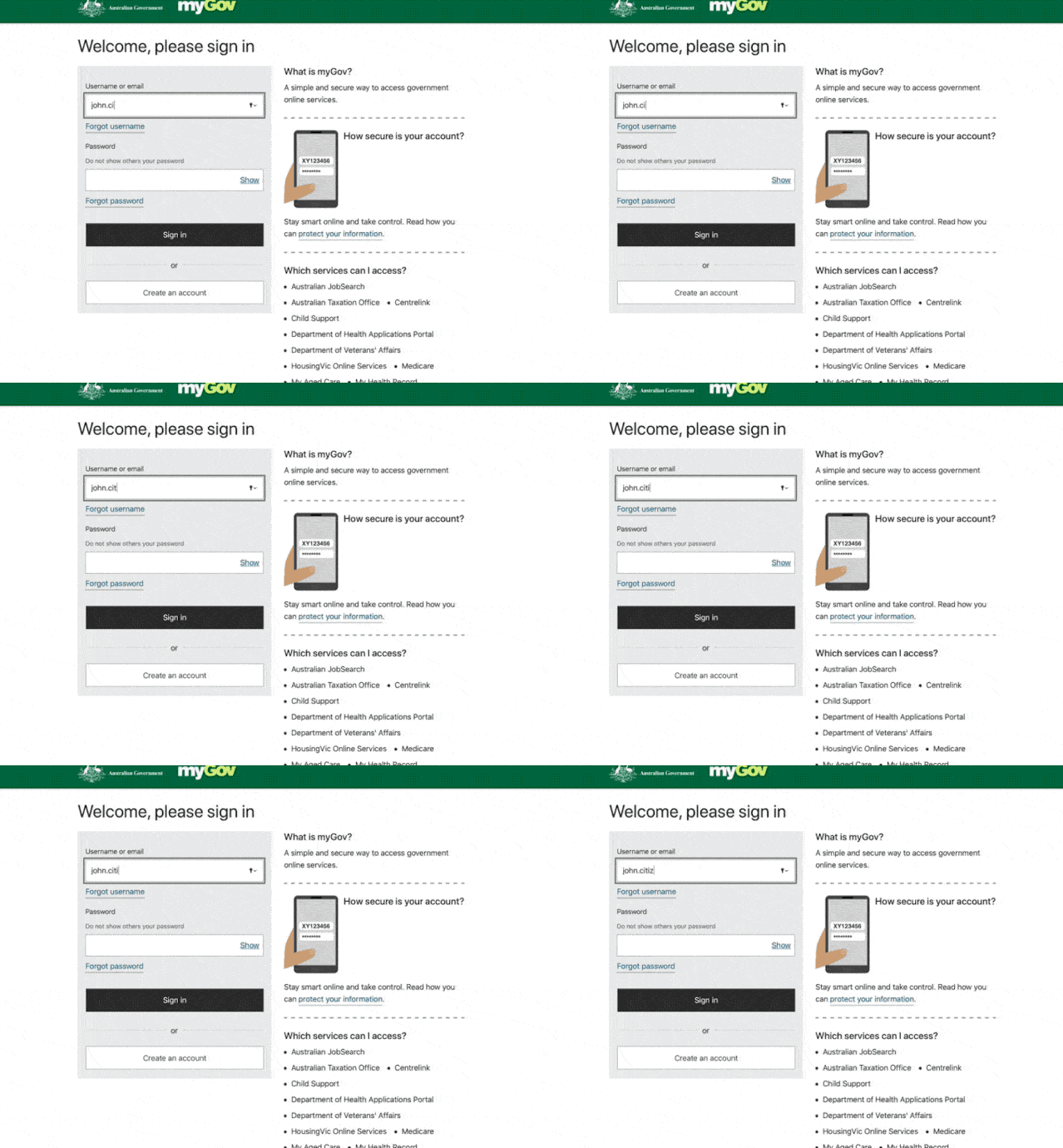
The Australian government has a free system called myTax, accessible through myGov (my.gov.au). It works directly in the browser, including on mobile.
To use myTax you need to
- Create a myGov account
- Link your myGov account to the ATO
- Access:
myGov → Australian Taxation Office → Tax → Lodgments → Income Tax
The ATO has a 3-minute demo video on how to lodge with myTax. Worth watching before you start.
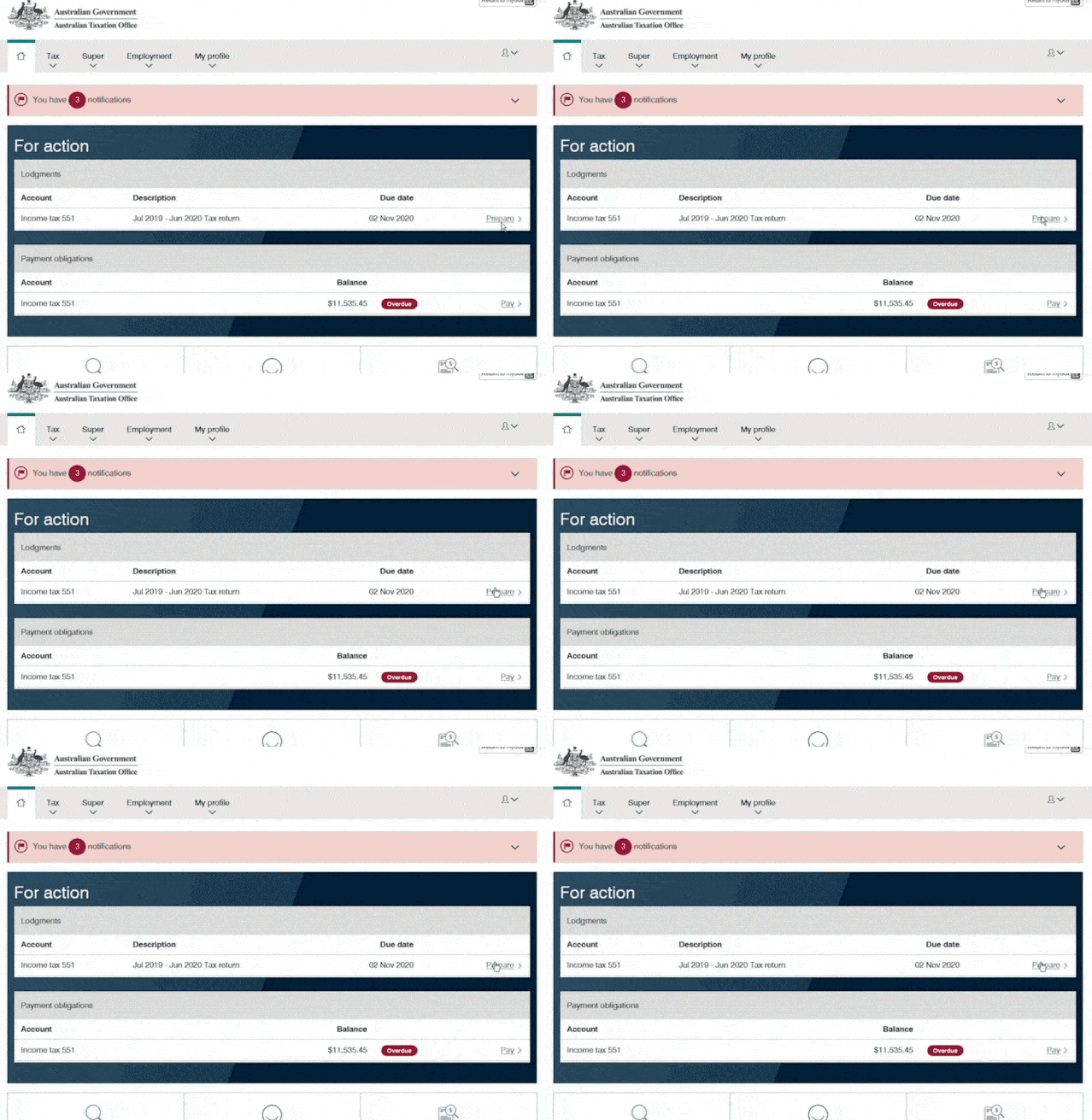
When to lodge
- The Australian financial year runs from 1 July to 30 June
- The deadline to lodge is 31 October
- If you use a registered tax agent, the deadline is automatically extended
- If there's a refund, it usually arrives within 2 weeks
How myTax is organised: the 4 steps
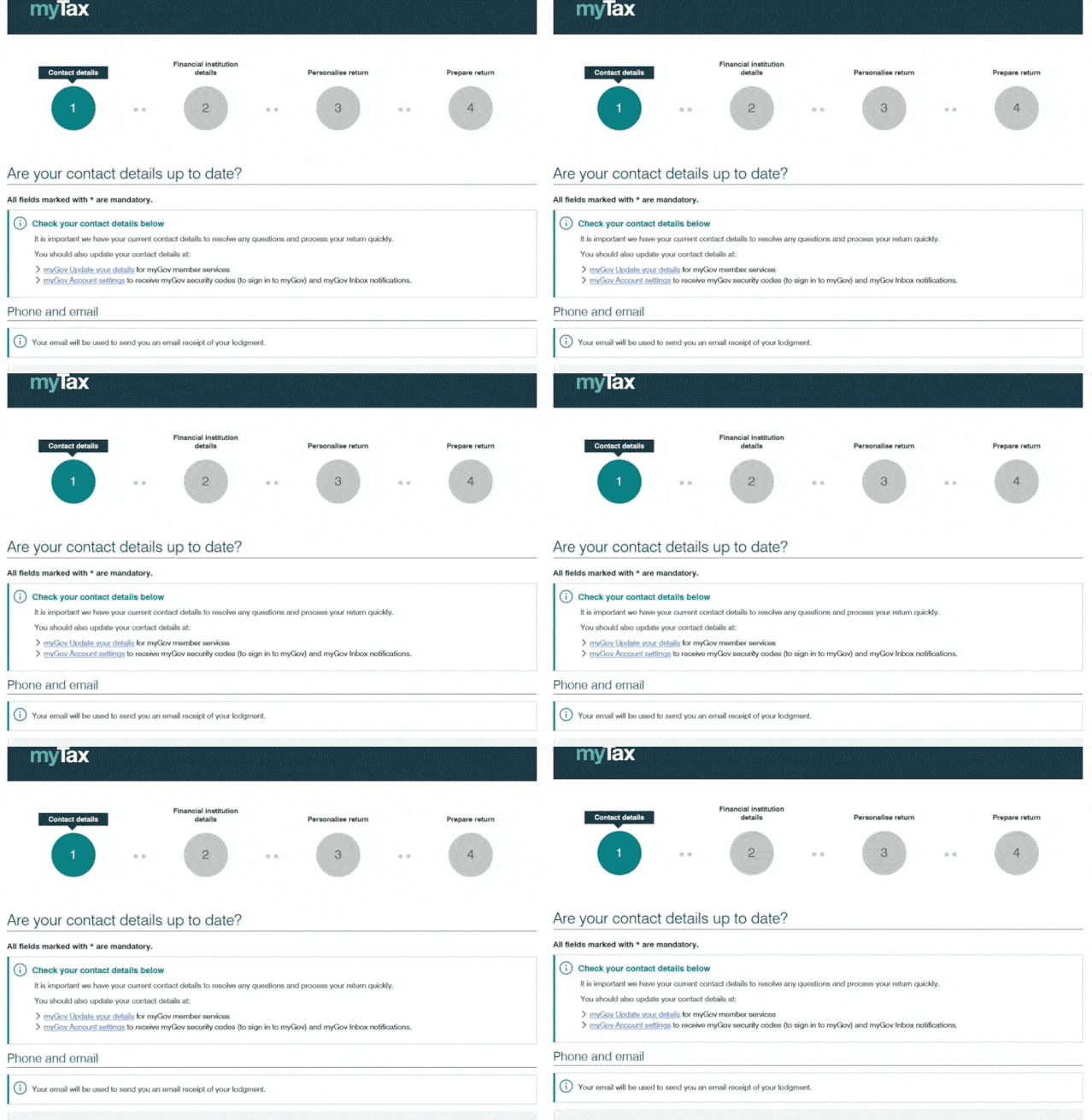
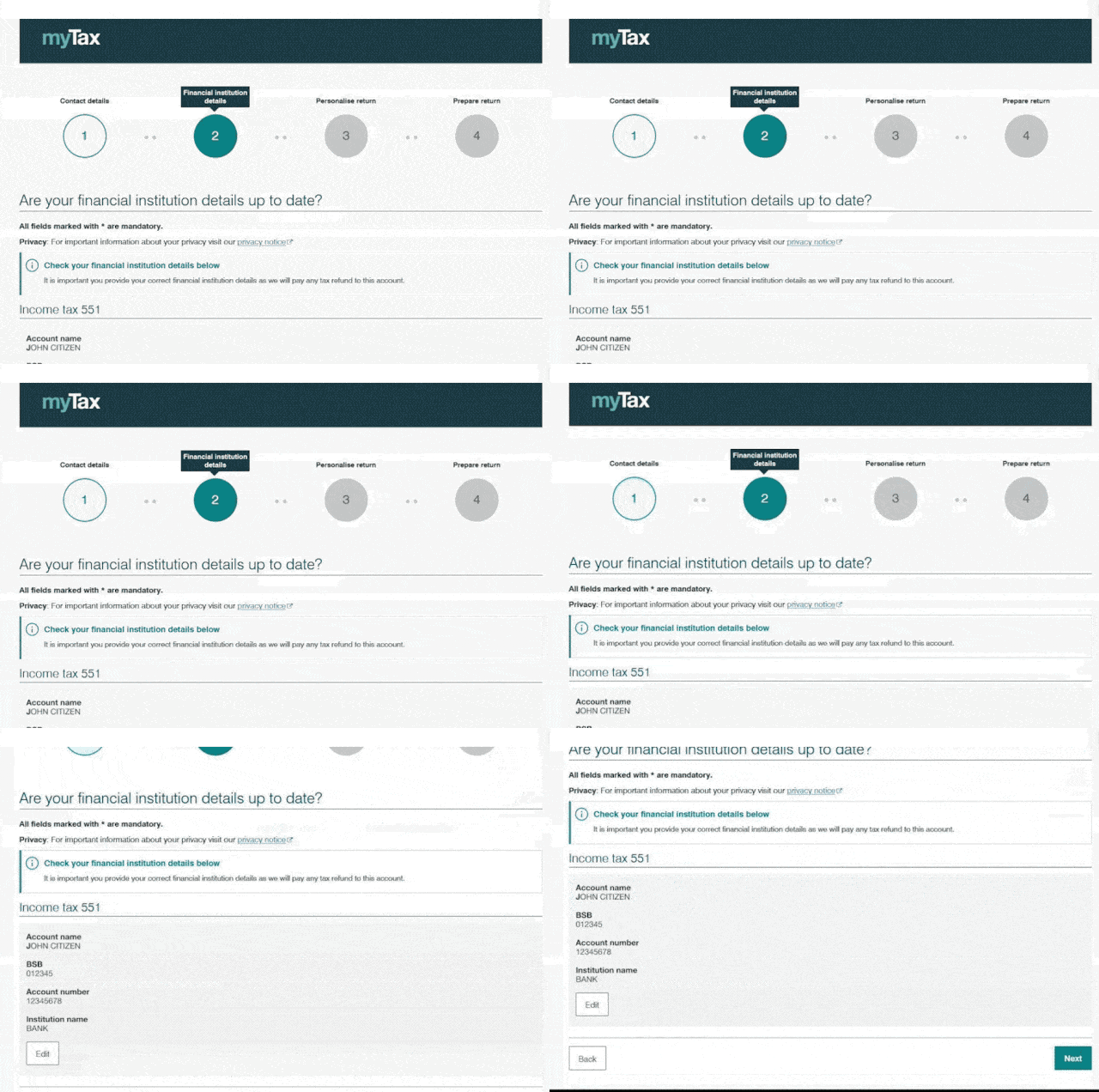
When you enter myTax and select the financial year, the system walks you through 4 steps in sequence. Knowing the flow before you start helps you stay on track:
1. Contact details — confirm your address and email. The ATO uses this information to contact you if needed.
2. Financial institution details — confirm the bank details where your refund will be deposited. If your account has changed since your last tax return, update it here.
3. Personalise return — questions about your situation in the financial year: were you an Australian resident for tax purposes? Did you have a spouse? The answers determine which sections appear in the next step.
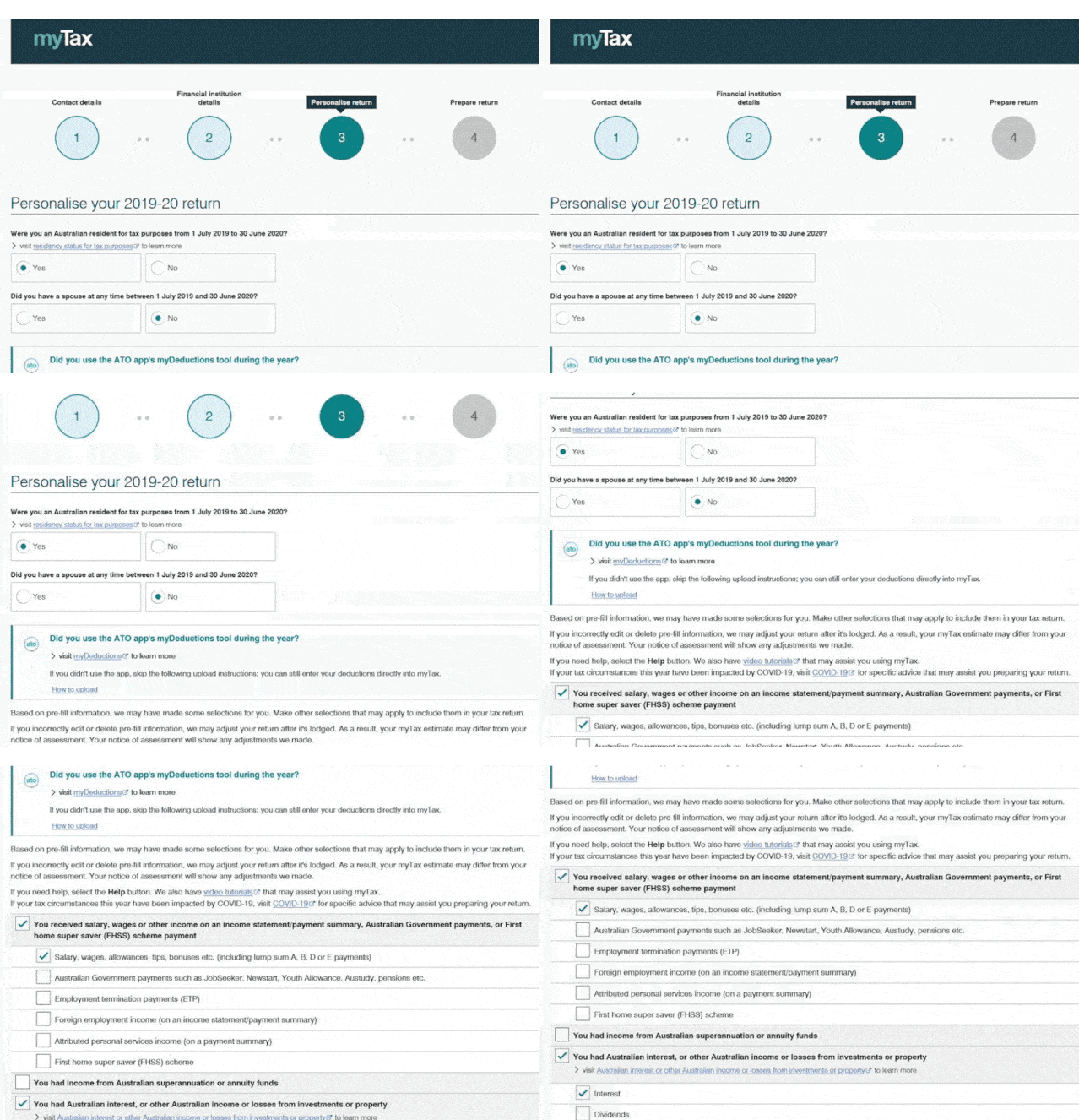
4. Prepare return — the main part: income, deductions, Medicare and health insurance. This is what the sections below describe in detail.
The magic of pre-fill: check your income first
One of the most useful features of the Australian system is pre-fill: the ATO automatically downloads most of your income information directly from your employers, banks and the government. You don't have to type everything from scratch.
What comes pre-filled
- Salaries and wages from all your jobs (via Single Touch Payroll — STP)
- Tax withheld
- Superannuation contributions
- Bank income (interest)
- Health insurance information
Most information becomes available after the end of July. Employers have until 14 July to finalise their income statements. Lodging after late July ensures everything is available.
How to check Income Statements
After entering myTax and selecting the financial year, go to: myGov → ATO → Employment → Income Statements
Each income statement appears with one of two statuses:
- ✅ "Tax ready" — the employer has finalised it, you can use it
- ⚠️ "Not tax ready" — the employer hasn't finalised it yet, wait or contact them
If you had multiple jobs, they'll all appear listed separately. If one is missing, contact the employer to confirm they're reporting via STP. If needed, call the ATO: 13 28 61.
What to check in each income statement
- Employer name
- Total salary and wages
- Total tax withheld
- Reportable fringe benefits (if any)
- Reportable employer super contributions (if any)
If the pre-filled amount is incorrect, do not submit it as is. Contact your employer first to correct it. If you can't reach them, use your payslips to verify the correct figures.
What you need to declare as income
In addition to pre-filled salaries, check and potentially add:
Salaries and wages (multiple jobs)
In myTax: Prepare Return → Income → Salary, wages, allowances, tips, bonuses
If you worked at 2, 3 or 4 jobs, they should all appear. Click Add/Edit to review each one:
| Field | What it is |
|---|---|
| Gross income | Total gross salary |
| Tax withheld | Tax already deducted at source |
| Allowances | Allowances paid by the employer |
Bank income (interest)
If you have a bank account, any interest received comes pre-filled. Check whether the amounts match your bank statements.
Income received outside Australia — do you need to declare it?
A very common question: "Do I need to declare the rent I receive from Brazil? What about money invested back home?"
For the vast majority of immigrants on temporary visas, the answer is no.
Who is considered a temporary resident by the ATO?
The ATO defines a temporary resident as someone who:
- Holds a temporary visa (482, student, working holiday, 417, 485, etc.), AND
- Neither you nor your spouse is an Australian citizen or permanent resident
Direct quote from the ATO — Foreign and temporary residents
"If you are a temporary resident you only declare: income you derived in Australia and capital gains on taxable Australian property. Other foreign income and capital gains on property that is not taxable Australian property don't have to be declared."
Direct quote from the ATO — Foreign and temporary resident income
"Nick is present in Australia on a temporary visa. He meets the requirements to be a temporary resident. Nick earns interest income on an overseas bank account. He does not have to declare this income in his Australian tax return."
In practice: if you're in Australia on a temporary visa and receive rent, interest or other income from your home country, you generally don't need to declare it in your Australian tax return. Declare only what you earned here.
Exceptions — when the rule changes
- If you have a HELP, VSL or AASL debt (Australian government student loans), you'll need to declare your worldwide income
- Income from work or services physically performed outside Australia may have different rules
- Anyone who has previously had permanent residency or Australian citizenship has different rules
If you're unsure about your specific situation, consult a registered tax agent — especially if significant amounts are involved.
Legal deductions: what you can claim
The reality: most people have few deductions — and that's fine
Most immigrants start working in hospitality, construction, delivery, aged care or cleaning. For these profiles, available deductions are limited.
If your job doesn't require working from home, doesn't involve travel between multiple locations, and you don't wear a company-branded uniform or buy your own PPE, your tax return will be simple — confirm the income, check the income statements and submit. This is the most common scenario.
Understand each type of deduction below and assess what applies to your situation.
Home office (working from home)
Direct quote from the ATO — ATO Tax priorities 2025
"In order to claim a working from home deduction, you must be working from home to fulfil your employment duties (not carrying out minimal tasks) and you have to have records to prove you incurred additional expenses due to working from home."
People who work on-site — in a restaurant, café, construction site, hospital or doing delivery — are unlikely to qualify for this deduction. But if you have a formal arrangement with your employer to work from home for part of your duties, it's worth checking with a professional.
🔗 Official rule: ATO — Working from home expenses
Method 1: Fixed Rate — 70 cents per hour (simpler)
Direct quote from the ATO — Fixed rate method
"Using the fixed rate method allows you to claim 70 cents for every hour you work from home and covers your additional running expenses that are often difficult to apportion, like internet, phone usage, electricity and stationery. Remember that you can't then claim these items separately elsewhere in your tax return – no double dipping!"
- Amount: $0.70 per hour worked from home in 2024–25
- What it covers: electricity, gas, internet, phone, stationery and consumables — all included
- No dedicated office required — the kitchen table counts
- You can't claim internet or phone separately if you use this method
Mandatory documentation
- Record of all hours worked from home throughout the entire year (spreadsheet, timesheet, diary or roster)
- At least one bill for each service covered (electricity, internet, phone)
- The ATO does not accept retrospective estimates — records must be kept throughout the year
In myTax: Deductions → Other work-related expenses → Working from home
Method 2: Actual Cost
Calculates the real cost of each expense (electricity, internet, phone, etc.). May result in a larger deduction but requires significantly more record-keeping. Recommended for those with high household costs or a dedicated home office.
Transport and work-related travel
This is the most misunderstood deduction — and where the most errors occur.
Direct quote from the ATO — Trips you can and can't claim
"You can't claim trips between your home and regular place of work, except in limited circumstances. These trips put you in a position to start work and earn income but are not part of performing your work duties. The cost of these trips is a private expense."
What you CANNOT deduct
- Travel from home to work and back — even if it's far, by Uber or public transport
- Restaurant, café, construction or hospital workers: the commute is not deductible
- Delivery riders: the trip from home to the first pickup point is not deductible
What you CAN deduct
Direct quote from the ATO — Trips you can and can't claim
"You can claim a deduction for the cost of transport on trips you take in the course of performing your work duties. This includes to: travel from your regular place of work to meet with a client, attend work-related conferences or meetings away from your regular place of work, or go between 2 or more separate places of employment (provided none of the workplaces is your home), such as if you have more than one job."
| Situation | Example |
|---|---|
| Going directly from Job A to Job B on the same day (without going home) | Works the morning at a café and the afternoon at a supermarket |
| Visiting clients or different sites during a shift | Technician, nurse covering multiple sites, external sales rep |
| Travel to training or a meeting away from the regular workplace | Employee sent to another location by the employer |
| Transporting heavy equipment that can't be stored at work | Musician with instruments, carpenter with specific tools |
Practical example: Carlos works mornings at a café and afternoons at a supermarket. The trip from the café to the supermarket (without going home) may be deductible. The trips from home to the café and from the supermarket back home are not.
Documentation: public transport, taxi or Uber receipts. If using your own car, the ATO requires a logbook with specific records.
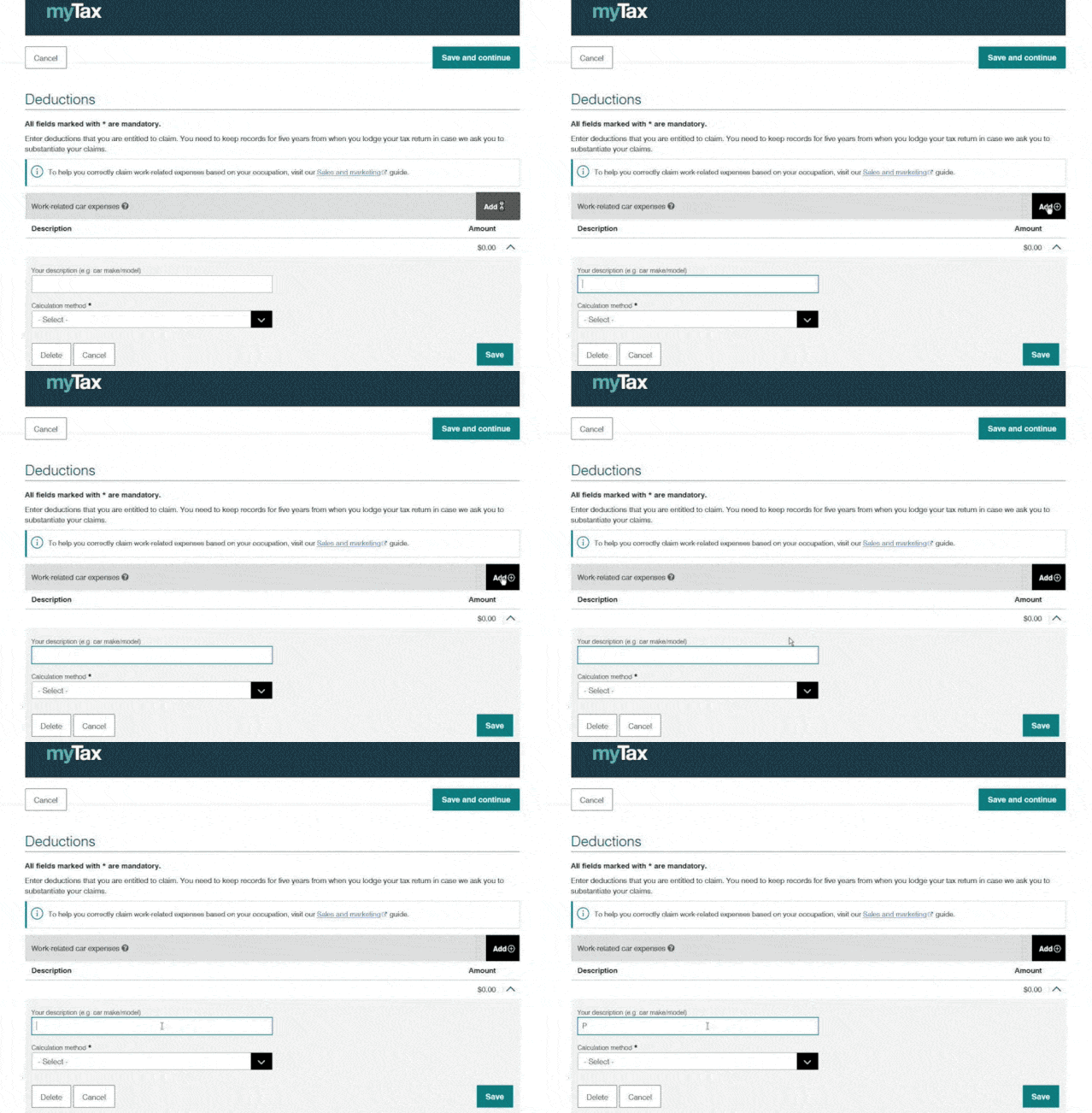
In myTax: Deductions → Work-related travel expenses → Add/Edit
Uniform, work clothing and laundry
This section causes the most confusion — especially for hospitality workers.
Direct quote from the ATO — Clothing, laundry and dry-cleaning expenses
"You can't claim a deduction for buying, hiring, repairing or cleaning conventional clothing you buy for work, even if your employer says the clothing is compulsory or you only wear it at work. 'Conventional clothing' is everyday clothing worn by people regardless of their occupation – for example, black trousers worn by waiters, business attire worn by office workers, or jeans or drill shirts worn by tradespeople."
The ATO only allows the deduction when the clothing identifies you as an employee of a specific company (has the logo) or protects you from physical risks at work.
What you CAN deduct
Uniform with company logo
- Shirt, jacket or apron with the employer's logo permanently affixed (embroidered or factory-printed — not a sticker)
- Uniform registered in the ATO's Register of Approved Occupational Clothing
Protective clothing (regardless of logo)
- Steel-capped safety boots
- Hard hat, hi-vis vest, protective gloves, safety glasses
- Flame-resistant trousers and shirts for work with fire risk
- Leather apron for welding
Occupation-specific clothing
- Nursing, aged care or healthcare scrubs or lab coat
- Chef's coat (the traditional long-sleeved white one — specific to the profession)
Laundry of these items: up to $150 without a receipt — but only if the total of all your deductions is ≤ $300.
What you CANNOT deduct — real examples
| Situation | Why you can't |
|---|---|
| Black trousers and black shirt required by a restaurant | Conventional clothing — can be worn outside work |
| Black shoes bought to work at a café | Common footwear, not PPE |
| Suit or blazer for the office | Conventional clothing |
| Polo shirt without the employer's logo | No company identification |
| "All black" outfit informally required by the manager | An informal requirement doesn't make it an official uniform |
| Clothes bought for a job interview | Not related to income already earned |
The vast majority of restaurants, cafés and bars require dark or "all black" clothing — but this is not considered a uniform by the ATO. You can only deduct it if the clothing has the company logo permanently affixed, or if it's genuine protective equipment.
In myTax: Deductions → Work-related uniform, occupation-specific and protective clothing → Add/Edit
Tools, equipment and technology
If you bought items to use at work and paid out of your own pocket (not reimbursed by your employer):
| Item cost | Rule |
|---|---|
| Up to $300 | Immediate deduction of the full amount |
| Over $300 | Deduction via depreciation over the item's useful life |
Valid examples: hand tools for construction, a laptop used for work (by the % of professional use), headphones for work calls, professional software you paid for yourself.
If you use the item for both work and personal purposes, deduct only the professional use percentage.
Who probably doesn't have this deduction: those working in restaurants, cafés, bars or aged care — equipment is generally provided by the employer.
In myTax: Deductions → Other work-related expenses → Tools, equipment and other assets
Education and professional training
Direct quote from the ATO — D4 Work-related self-education expenses 2025
"To claim a deduction for self-education expenses, you must be able to show there is a close connection between the course and your work activities at the time you incur the expenses: the course maintained or improved a skill or specific knowledge required for your then current work activities, or the course was leading to, or was likely to lead to, increased income from your then current work activities."
You can deduct
- A technical course to improve skills in your current job
- Certifications required or recognised in your current field (e.g. white card for construction)
- Professional licence required to perform the role
- Books and course materials
You cannot deduct
- General English courses — the ATO considers them personal education, not profession-specific
- Courses to change careers or fields
- University degree or initial qualification
- Courses preparing you for a job you don't yet have
Union fees and other common deductions
Union fees — the most forgotten and easiest deduction:
If you pay union fees (SDA, CFMEU, NUW, HSU, etc.), the amount is deductible and usually appears pre-filled in the income statement. Typical amount: $200–$500/year depending on the sector.
Phone and internet (without home office)
If you don't use the Fixed Rate home office method but use your own phone for work, you can deduct the percentage of professional use.
If you're already using the Fixed Rate home office method (70c/hour), phone and internet are already included — you can't claim them separately.
General rules that apply to all deductions
1. The expense was not reimbursed by the employer
If the company paid for or reimbursed the cost — uniform, tools, course, transport — you cannot deduct it. Only what came out of your own pocket and stayed that way is deductible.
2. The $300 rule
Direct quote from the ATO — Records you need to keep
"You must have written evidence, such as receipts, for all work-related expenses if the total amount of work-related expenses is more than $300. If the total amount of your work-related expenses is $300 or less, you can claim a deduction without written evidence, as long as the expenses were actually incurred."
You can claim up to $300 in work-related deductions without providing receipts. But that doesn't mean you can include things you didn't actually spend. The amount must be real — the difference is that below $300 the ATO doesn't require proof. Including deductions you're not entitled to is tax fraud.
3. If a tax agent includes items you don't recognise, ask
- "Did I actually incur this expense?"
- "Why am I entitled to this deduction?"
A good professional will be able to explain.
How much each deduction is worth
For those earning between $60k and $80k, the marginal rate in 2024–25 is 30%. Every $100 of valid deduction means approximately $30 back in your pocket.
| Deduction | Value left on the table without the receipt |
|---|---|
| $100 in uniform laundry | ~$30 |
| $300 in union fees | ~$90 |
| $500 in professional courses | ~$150 |
| $806 in home office (1,152h × 70c) | ~$242 |
| $1,500 in work tools | ~$450 |
Always keep receipts — even small ones. Take a photo right when you make the purchase and save it to a Google Drive or iCloud folder. Paper receipts fade, get lost and deteriorate — digital ones don't. The ATO also has an app called myDeductions (inside the ATO app) where you photograph and categorise receipts throughout the year.
Summary: who probably does (or doesn't) have deductions
| Work profile | Typical available deductions |
|---|---|
| Hospitality (waiter, barista, cook) | Uniform/apron with logo if applicable, PPE if used, laundry of official uniform, union fees |
| Construction | Steel cap boots, PPE (hard hat, hi-vis, gloves), own tools, white card, union fees |
| Delivery | Very few — commute not deductible, equipment generally personal |
| Aged care / healthcare | Scrubs/lab coat if you purchased them, courses in the field, union fees |
| Office / admin | Home office if working from home, professional courses, union fees |
| Two different jobs | Transport between jobs (not to/from home), deductions for each job separately |
Deductions summary — where to enter in myTax
| Deduction type | Section in myTax |
|---|---|
| Home office | Other work-related expenses → Working from home |
| Transport between jobs | Work-related travel expenses |
| Uniform and laundry | Work-related uniform, occupation-specific clothing |
| Tools and equipment | Other work-related expenses |
| Courses and education | Self-education expenses |
| Union fees | Other work-related expenses |
| Phone/internet (if not in WFH) | Other work-related expenses |
Is it worth hiring a tax agent?
For most immigrants with a TFN and a straightforward situation — one or two jobs, no investments or rental income — myTax is sufficient and free. But a tax agent can help if you have questions, multiple deductions to calculate or want extra peace of mind.
Estimated market cost (2025–26)
| Return type | Estimated cost |
|---|---|
| Simple (1–2 jobs, basic deductions) | $100–$250 |
| Intermediate (multiple jobs, various deductions) | $250–$450 |
| Complex (investments, rental income, ABN) | $450+ |
The tax agent's fee is deductible the following year. If you paid $200 to a tax agent in August 2025 to lodge the 2024–25 return, that amount becomes a deduction in the 2025–26 return — resulting in ~$60 back in tax. The real cost is around $140–$175 for a simple $200 return.
🔗 To find a registered tax agent: tpb.gov.au — Find a registered tax practitioner
Medicare Levy and the exemption for immigrants
What is the Medicare Levy?
Every Australian resident pays 2% of their taxable income as Medicare Levy — this is what funds the public healthcare system. For someone earning $80,000, that's $1,600 per year.
What about those without access to Medicare?
Many immigrants on temporary visas (482, students, working holiday, etc.) are not entitled to Medicare. In those cases, you can apply for a full or partial Medicare Levy exemption.
To do this, you need a document called a Medicare Entitlement Statement (MES), issued by Services Australia. It proves the period during which you had no entitlement to Medicare.
For information on how to apply for the MES (form MS015, deadlines and where to send it), see the base tax return article.
How to enter the exemption in myTax
- In myTax, go to the Medicare section
- Select Medicare levy reduction or exemption
- Answer Yes if you were in an exemption category during the year
- Enter the number of exempt days in the Full 2% levy exemption – number of days field
- Answer Yes to the question: "Were you a temporary resident for Medicare purposes and have a Medicare entitlement statement from Services Australia?"
Example: Priya spent the entire financial year without Medicare access. She enters "365" as the number of exempt days and answers Yes about having the MES.
Having the MES does not automatically guarantee the exemption — you need to enter the information correctly in the tax return.
🔗 Medicare levy exemption — not entitled to Medicare benefits
Private health insurance
If you have private health insurance in Australia, the system will ask about it in the Medicare Levy Surcharge section.
The Medicare Levy Surcharge (MLS) is an additional tax (1% to 1.5%) for people who:
- Don't have private hospital cover, AND
- Earn above ~$93,000/year (for singles)
If you have private health insurance, your provider sends the data directly to the ATO and it appears pre-filled. Check that the policy number and coverage period are correct.
In myTax: Medicare → Private health insurance
Investments, shares and other income
If you have shares, ETFs, cryptocurrencies, rental income or other more complex income sources, this article doesn't cover those cases — they involve Capital Gains Tax (CGT) and other considerations that deserve attention from a professional.
The ATO has detailed guides:
Checklist before submitting
Before clicking Submit, confirm:
- All your jobs appear in the income section
- All income statements are listed as Tax ready
- The gross income and tax withheld figures match your payslips
- You've only entered deductions for expenses you actually had
- If exempt from Medicare, you've entered the number of days and answered the MES question
- If you have health insurance, the details are correct in the Medicare section
- You have documentation to support all deductions (if total > $300)
- Your bank account details for the refund are correct in myGov
Quick summary: the 6 steps of your tax return
Go to myGov → ATO → Tax → Lodgments → Income Tax. Wait until the end of July so that employer data is available — most income statements are only Tax ready after that date.
Review all income statements under Salary, wages, allowances. Each job should appear with Tax ready status. Compare with your payslips. If you have a temporary visa, you don't need to declare income received outside Australia.
Only include what you actually spent and that was not reimbursed by your employer: home office (if working from home by requirement), transport between two jobs on the same day, uniform with logo or PPE, tools paid out of pocket, courses directly related to your current job, union fees.
If you have a temporary visa and no access to Medicare, go to Medicare → Medicare levy reduction or exemption and enter the number of exempt days based on your Medicare Entitlement Statement (MES).
If you have private health insurance in Australia, check that the pre-filled information under Medicare → Private health insurance is correct (policy number and coverage period).
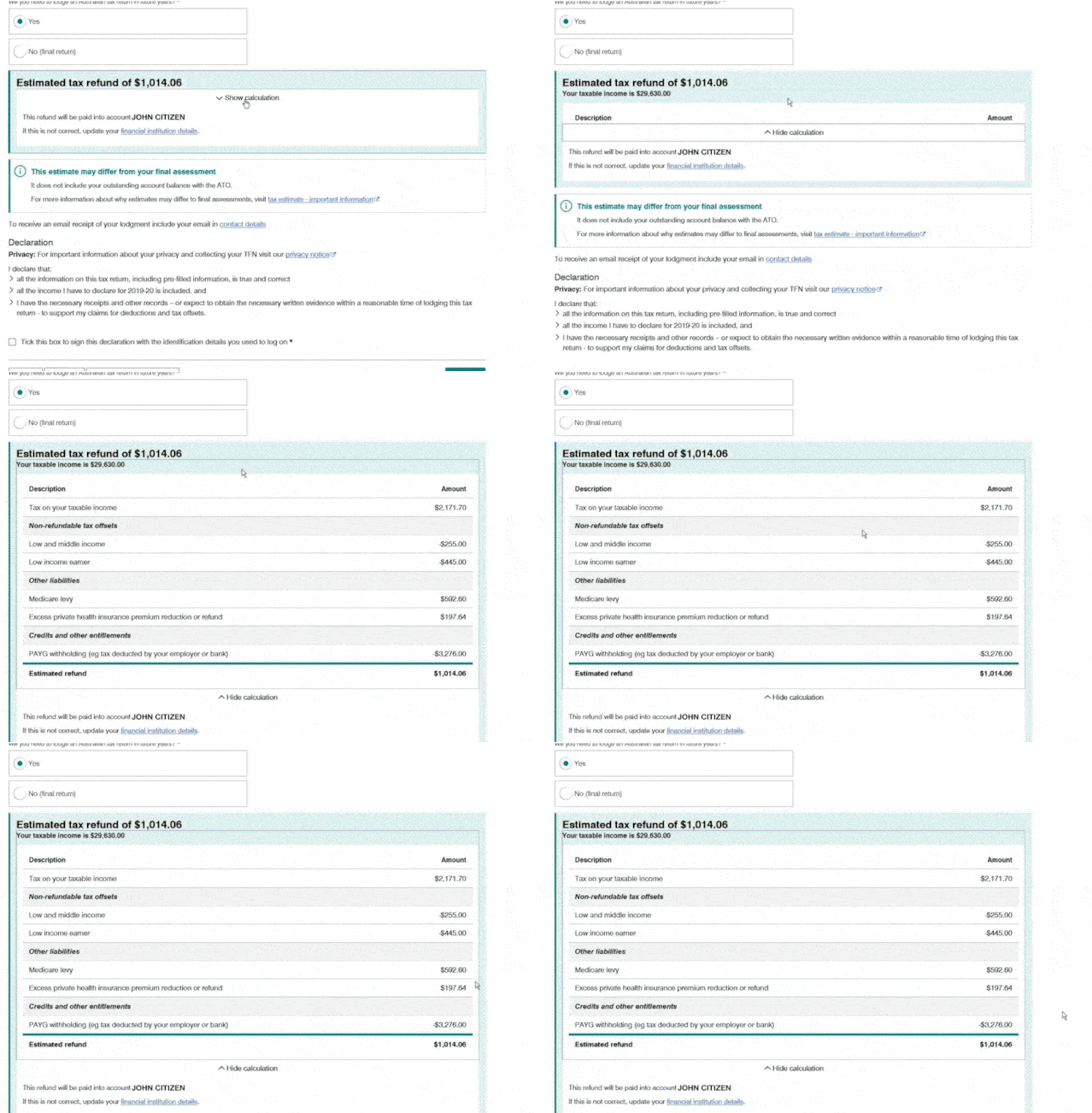
Use the checklist above to confirm everything is correct before clicking Submit. If there's a refund, it usually arrives within 2 weeks.
Resources and useful links
Official ATO links
- Lodge your tax return online with myTax
- Work-related deductions — overview
- Working from home — Fixed Rate Method
- Medicare levy exemption
- Pre-filling your online tax return
If you need help
- Tax Help Program (free, for those earning up to ~$60,000): ato.gov.au/taxhelp
- National Tax Clinics (free): nationaltaxclinics.gov.au
- Registered Tax Agent (paid, but deductible): tpb.gov.au
- ATO by phone: 13 28 61 (English)
Comments
Have something to add or a question? Leave a comment below — your experience can help other immigrants in Australia.
Comments are public. You can delete yours from the same browser and device you used to post.
Loading comments…