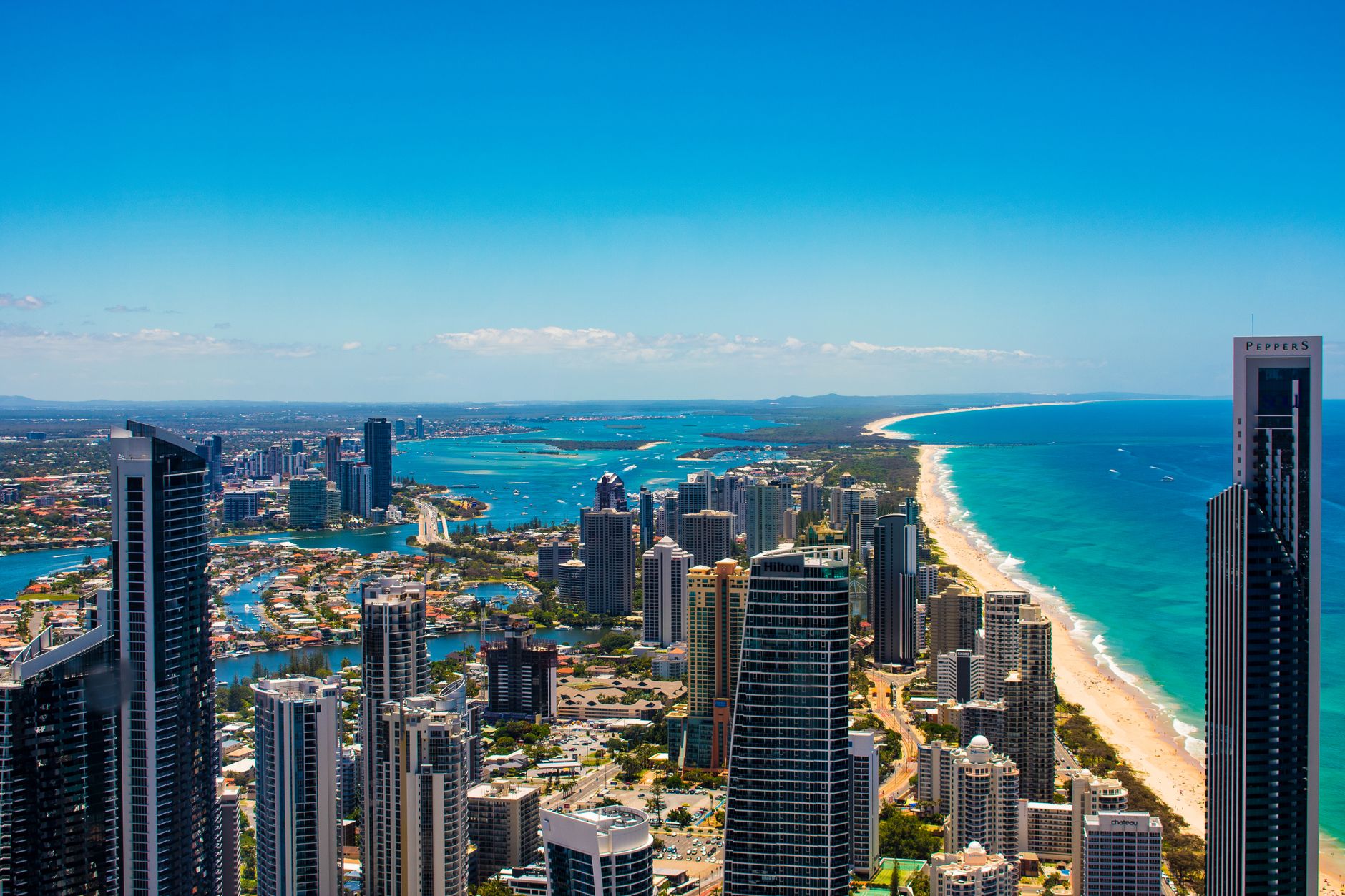
Gold Coast and Brisbane are close enough (about an hour's drive between city centres) to treat as a single region — beach and theme parks on one side, a big city and urban culture on the other. It's the most "family" region on the Australian route, but it works well for any kind of traveler.
If you haven't planned the rest of your itinerary yet, the complete Australia travel guide helps you fit this region into a bigger trip.
What to see
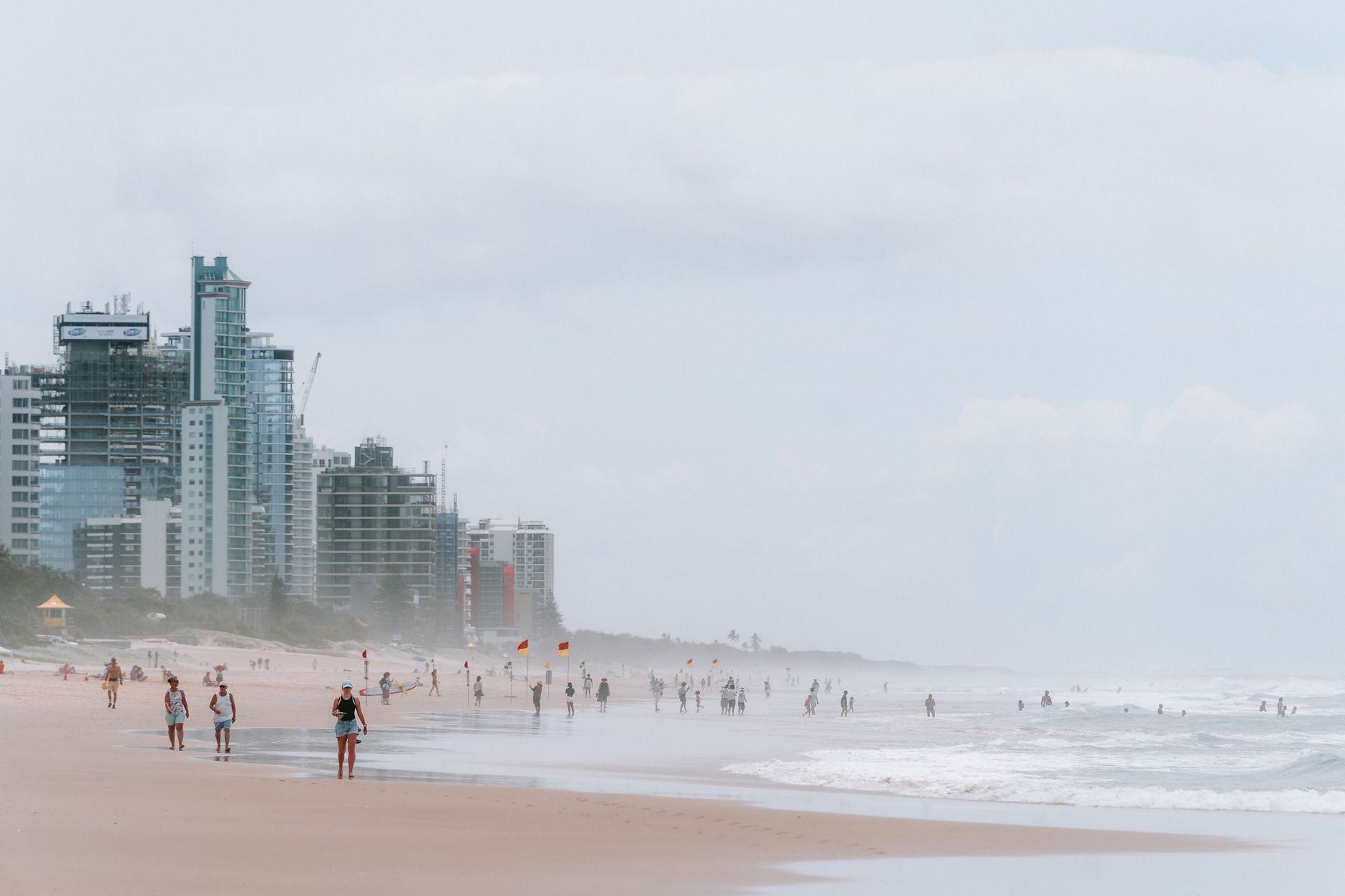
- Surfers Paradise — the best-known beach on the Gold Coast, with about 2-3km of sand, patrolled year-round by the Surf Life Saving Club. The official name dates to 1933 (it used to be called Elston); the high-rise era began in the 1970s. Q1, Australia's tallest building (322.5m), has SkyPoint, the country's only beachfront lookout, on the 77th floor at 230m up — you can see from Brisbane to Byron Bay on a clear day.
- Theme parks — Warner Bros. Movie World, Dreamworld and Sea World are the three main ones, and each has quite a different identity — it's not "more of the same" three times over. A single-day ticket runs around AU$99-119 per park; if you're planning to visit more than one, multi-park passes usually work out cheaper per day than buying separately.
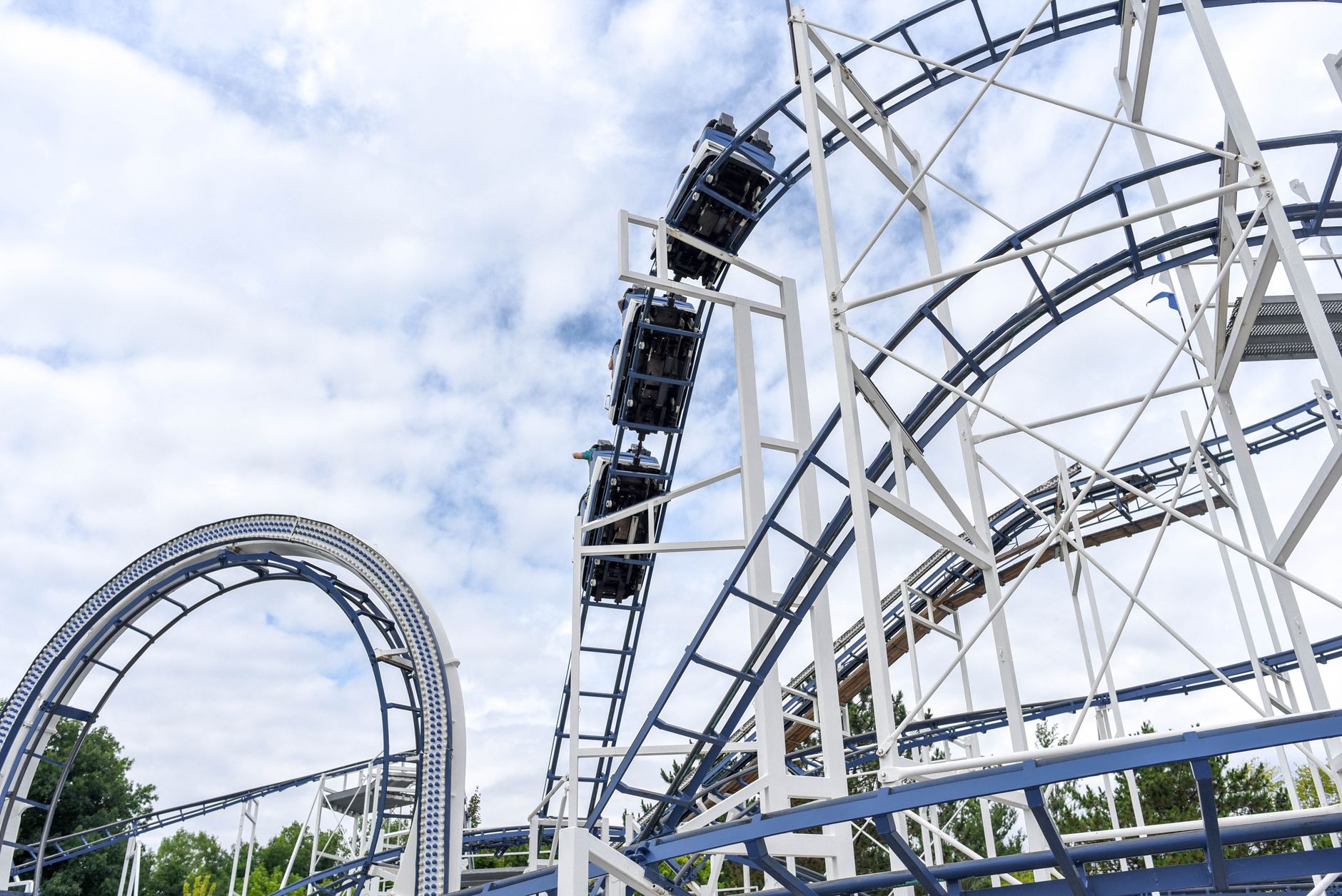
Movie World is strongest on characters and themed experiences (DC, Looney Tunes), with a daily parade and a heavyweight roller coaster — the classic theme park experience. Dreamworld has the most extreme rides (giant swing, free-fall tower) and a native wildlife area inside the park — the neighboring water park, White Water World, is a separate ticket (from AU$79), only included in the combined annual pass. Sea World is focused on marine life — sharks, polar bears, penguins.
| Profile | Best option |
|---|---|
| Classic park experience, characters and shows | Movie World |
| Extreme rides + water park + native wildlife | Dreamworld |
| Main interest is marine life | Sea World |
| Several days, want to see more than one | Multi-park pass |
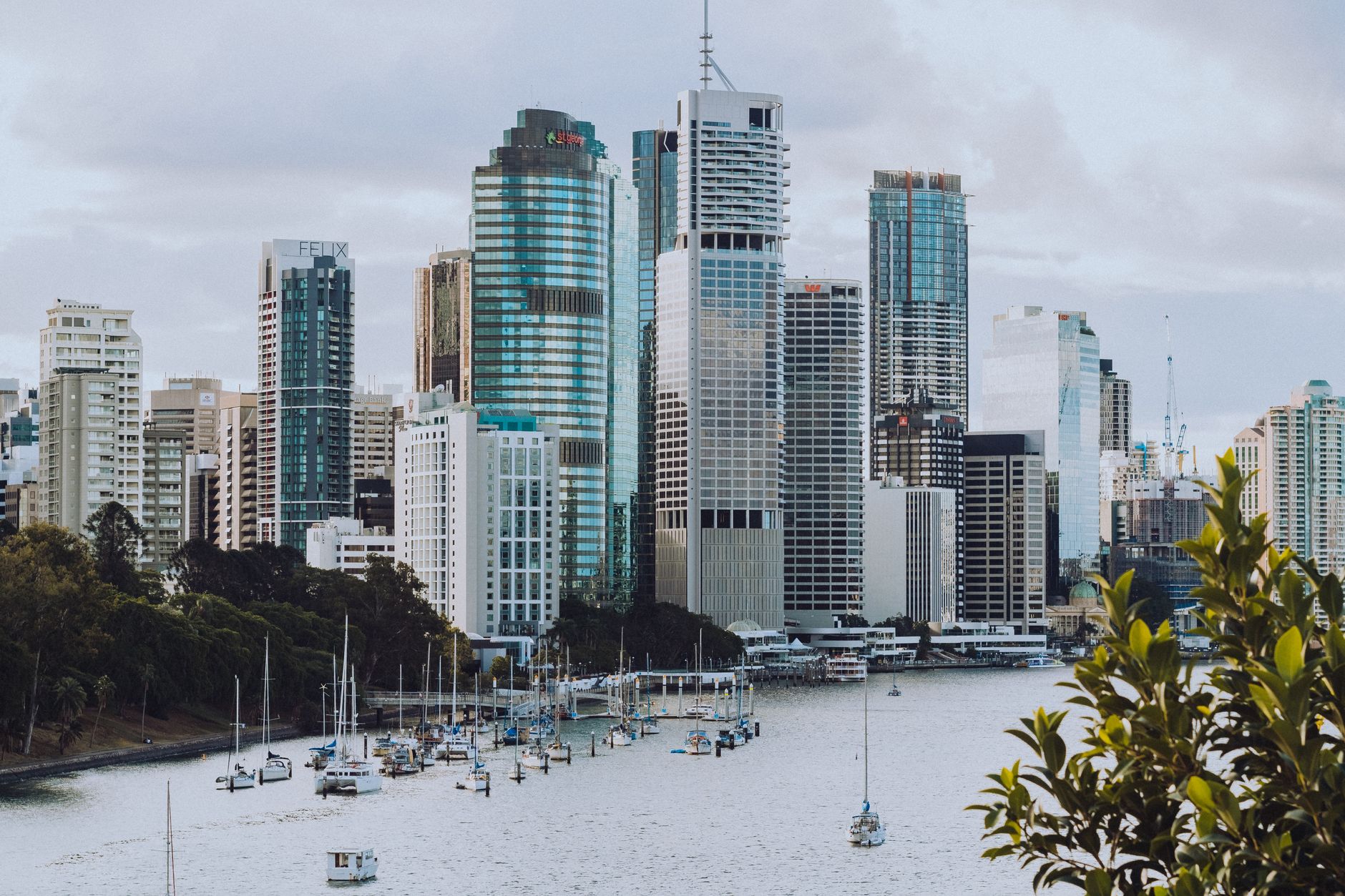
- Brisbane CBD and South Bank — South Bank Parklands was built on the old Expo 88 site and opened to the public in 1992. It's home to Streets Beach, the country's only artificial beach inside an urban area, with a free lagoon and white sand. The Wheel of Brisbane, a 60m Ferris wheel built for Queensland's 150th anniversary, has air-conditioned cabins and 360° views of the city. At the end of the park is GOMA (Gallery of Modern Art), with free and paid exhibitions, its own cinema and an interactive kids' wing.
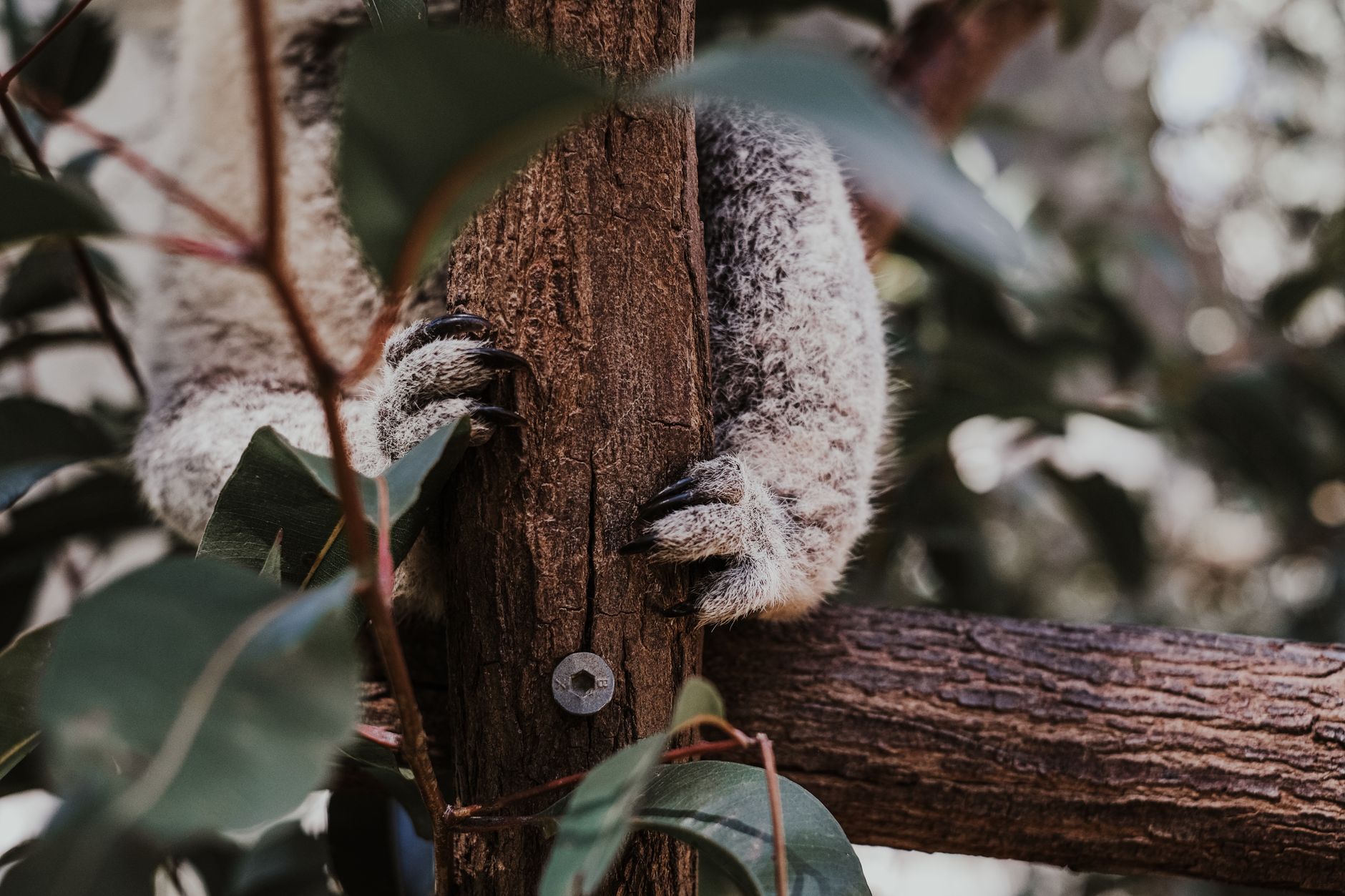
- Lone Pine Koala Sanctuary — the world's largest koala sanctuary, about a 20-minute bus ride from Brisbane's city centre. A single ticket runs around AU$45-59 for adults — worth booking ahead to secure a slot to hold a koala (a separate paid activity, subject to state-specific rules).
- Byron Bay (day trip) — technically NSW territory, but it's the most popular day trip out of the region. About 95km and 1h20-1h45 by car from the Gold Coast (longer during peak hours or school holidays).
Byron Bay — the region's most popular day trip
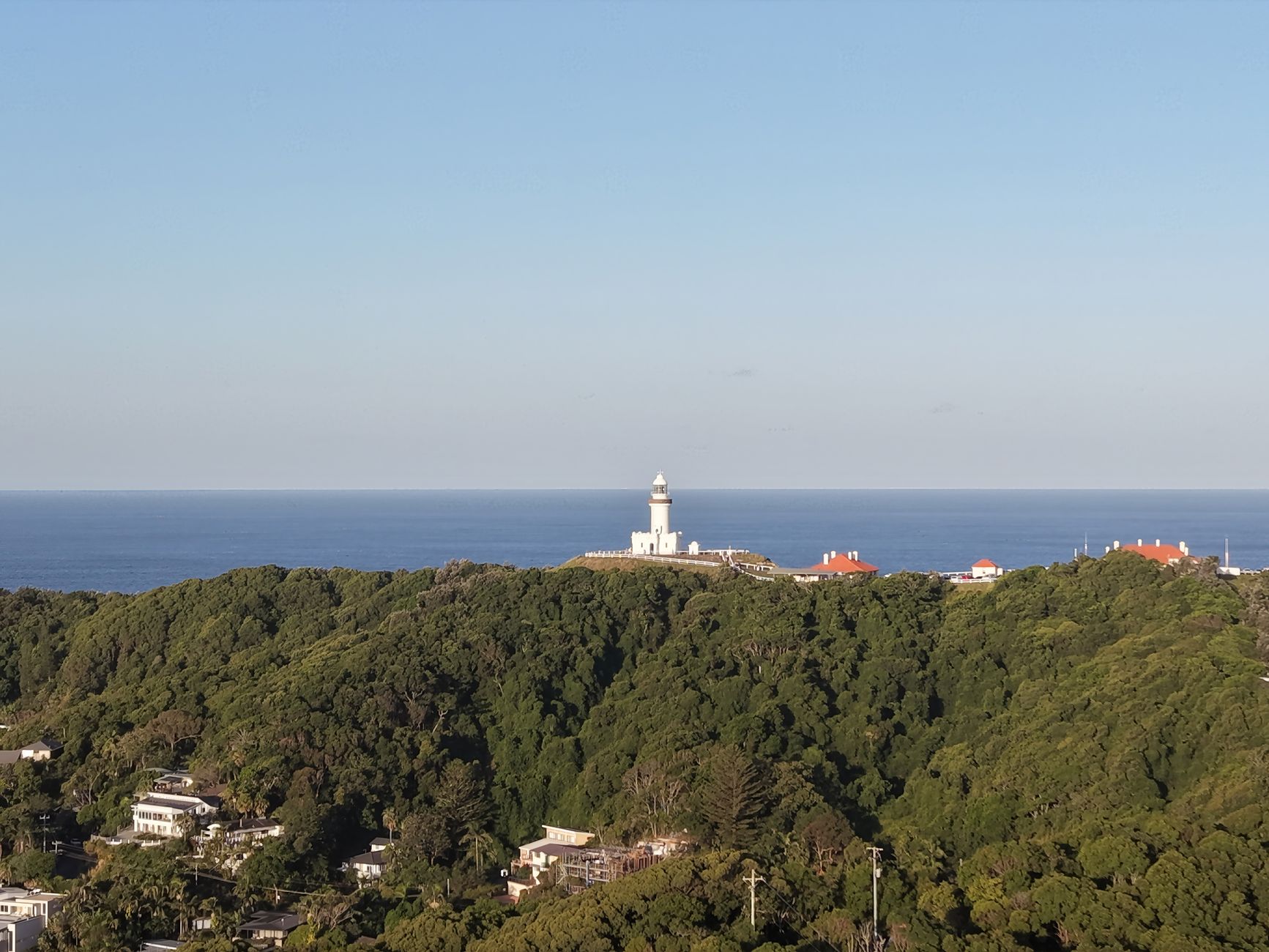
Byron Bay used to be a quiet surf town and is now a digital nomad hotspot — even though it's technically in a different state (NSW, not Queensland). The reason to go is clear: the easternmost point of the Australian mainland, good beaches, and one of the country's best whale-watching spots without leaving the coast.
Cape Byron Lighthouse sits at the easternmost point of the mainland — literally the first place in the country to see the sunrise every day. Access to the lighthouse grounds is free, and the walk from the main car park takes about 20 minutes at an easy pace.
Between May and November, tens of thousands of humpback whales pass along the coast on their annual migration — whale-watching tours generally start operating in June, with two peak sighting periods: July (northbound migration) and September (return migration, with calves closer to shore). Since Cape Byron is the most prominent point on the east coast, whales pass much closer to shore here than in most other places in the country — you can see them right from the lighthouse trail, no boat needed.
Besides the lighthouse, the town has good beaches for surfing and swimming (Main Beach, Wategos Beach), a small centre with a good range of restaurants and a relaxed nightlife — the counterpoint to the rest of the region.
How to get there
There are two airports in the region: Gold Coast Airport (OOL) and Brisbane Airport (BNE). If your focus is the beach and especially Byron Bay, OOL tends to be more convenient — closer, simpler to get through. If you want more flight options (including international) or will focus more on Brisbane, BNE has a wider range of airlines.
As with the other entry points, there's no direct flight from South America — the most common connection also goes through Santiago, Chile.
Getting around
The region uses the Translink go card for public transport between Gold Coast and Brisbane (train, bus, the G:link light rail on the Gold Coast). For Byron Bay, the most practical option is a rental car or an organized tour — there's no direct train there.
How much it costs
| Item | Price range |
|---|---|
| Hostel | AU$15–40/night |
| 3-4 star hotel | AU$140–230/night |
| Simple meal | AU$15–25 |
| Theme park (single-day ticket) | ~AU$99–119 |
| Multi-park pass (several days) | Usually pays off if visiting 2+ parks |
| Lone Pine Koala Sanctuary | ~AU$45–59 (adult) |
Buying theme park tickets online, in advance, is usually cheaper than paying at the gate on the day.
Base itinerary
3 days: day 1 — Surfers Paradise and the beach. Day 2 — a theme park (full day). Day 3 — Byron Bay (day trip) or Brisbane/South Bank.
5 days: the 3 days above, plus a second theme park and an extra day exploring Brisbane's centre at a slower pace.
Comments
Have something to add or a question? Leave a comment below — your experience can help other immigrants in Australia.
Comments are public. You can delete yours from the same browser and device you used to post.
Loading comments…