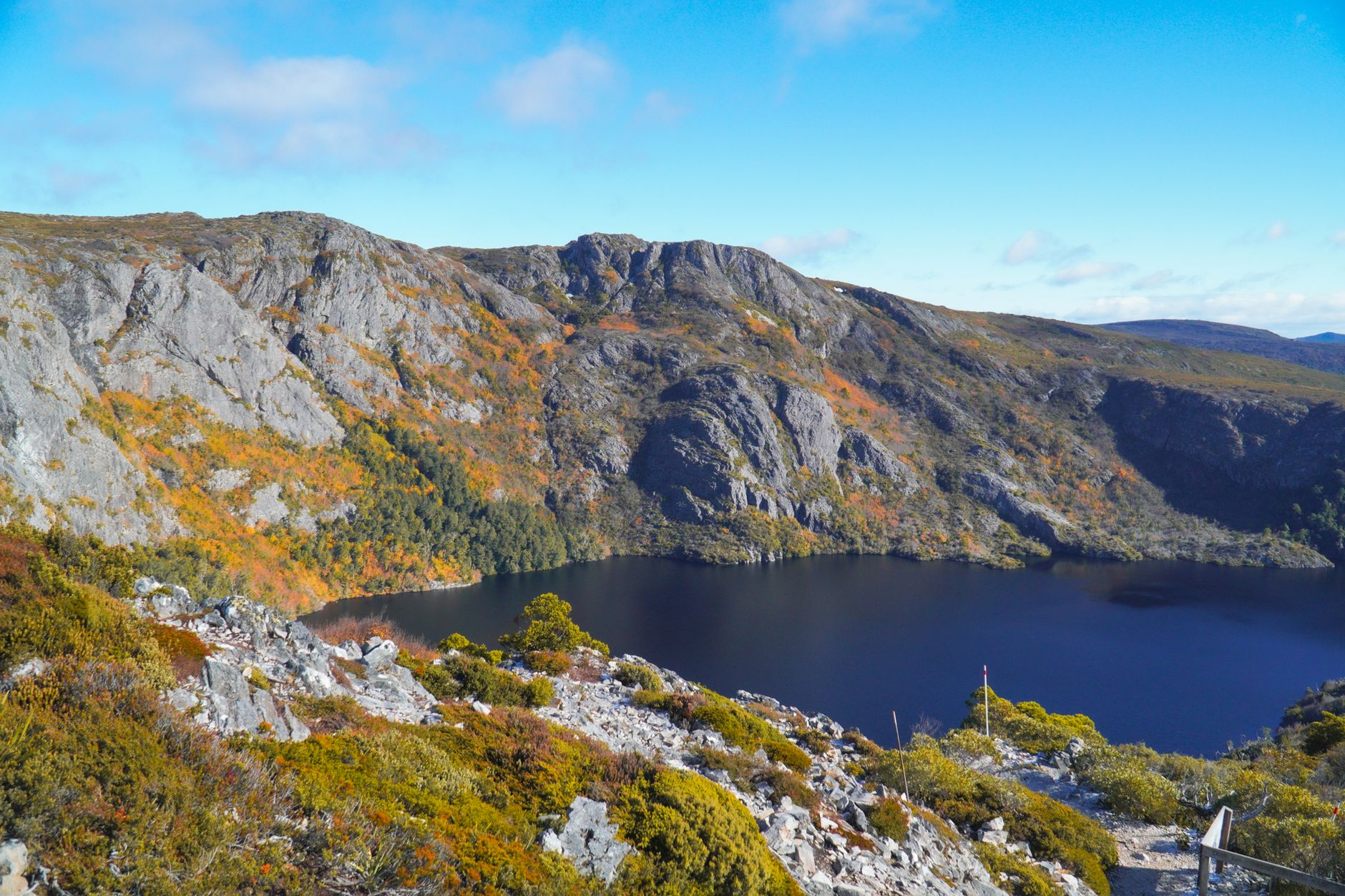
Tasmania is an island south of the mainland, with an identity quite different from the rest of the country — colder, wilder, with attractions heavy enough to stand on their own, not dependent on any other Australian city. It's, like Uluru, a trip of its own, not a stop within another itinerary.
If you haven't planned the rest of your trip yet, the complete Australia travel guide explains why Tasmania usually sits outside the east coast route.
MONA — Museum of Old and New Art
An internationally renowned contemporary art museum in Hobart. Admission runs around AU$39, plus the ferry that takes you there from central Hobart (~AU$30 round trip) — the ferry ride itself is already part of the experience.
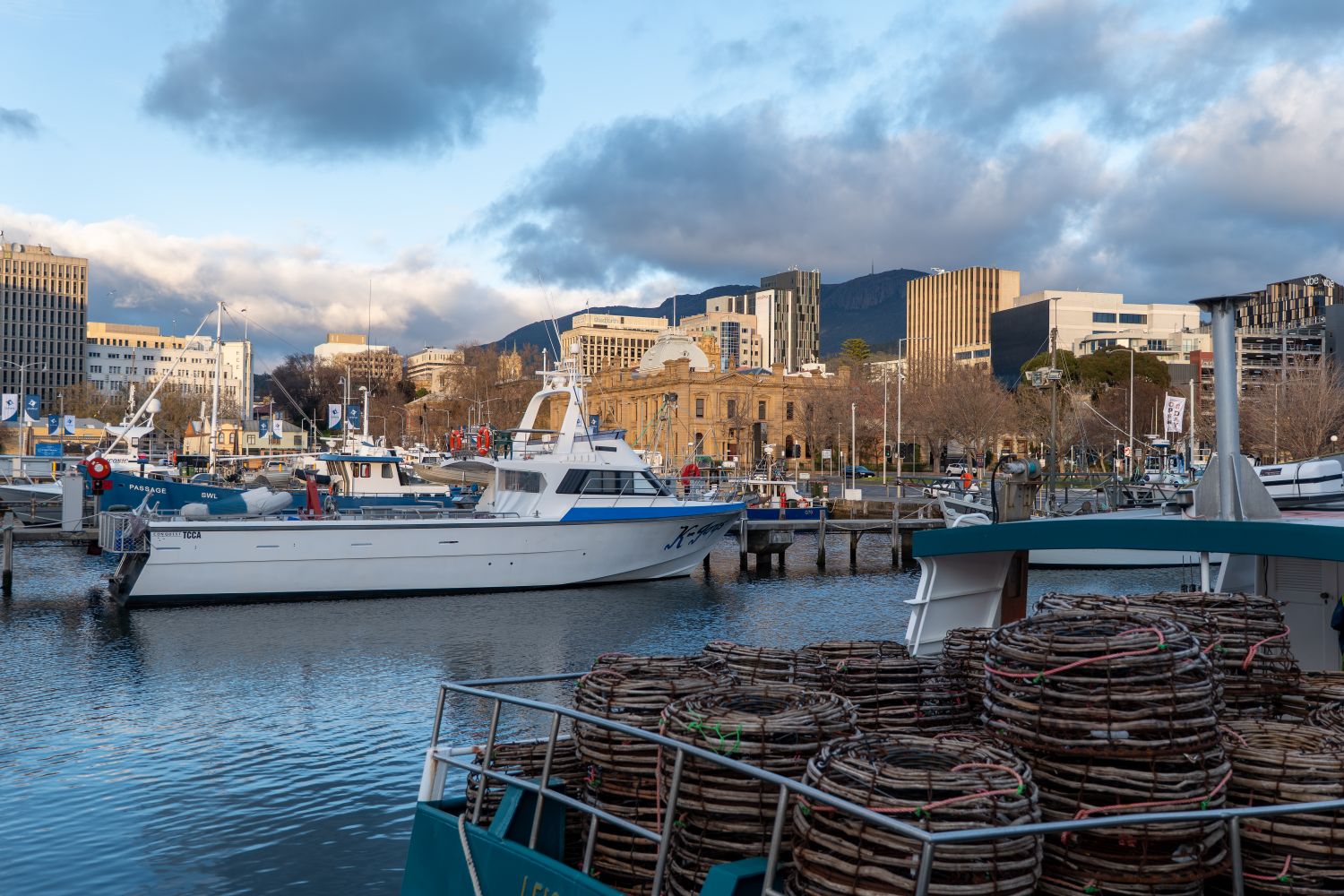
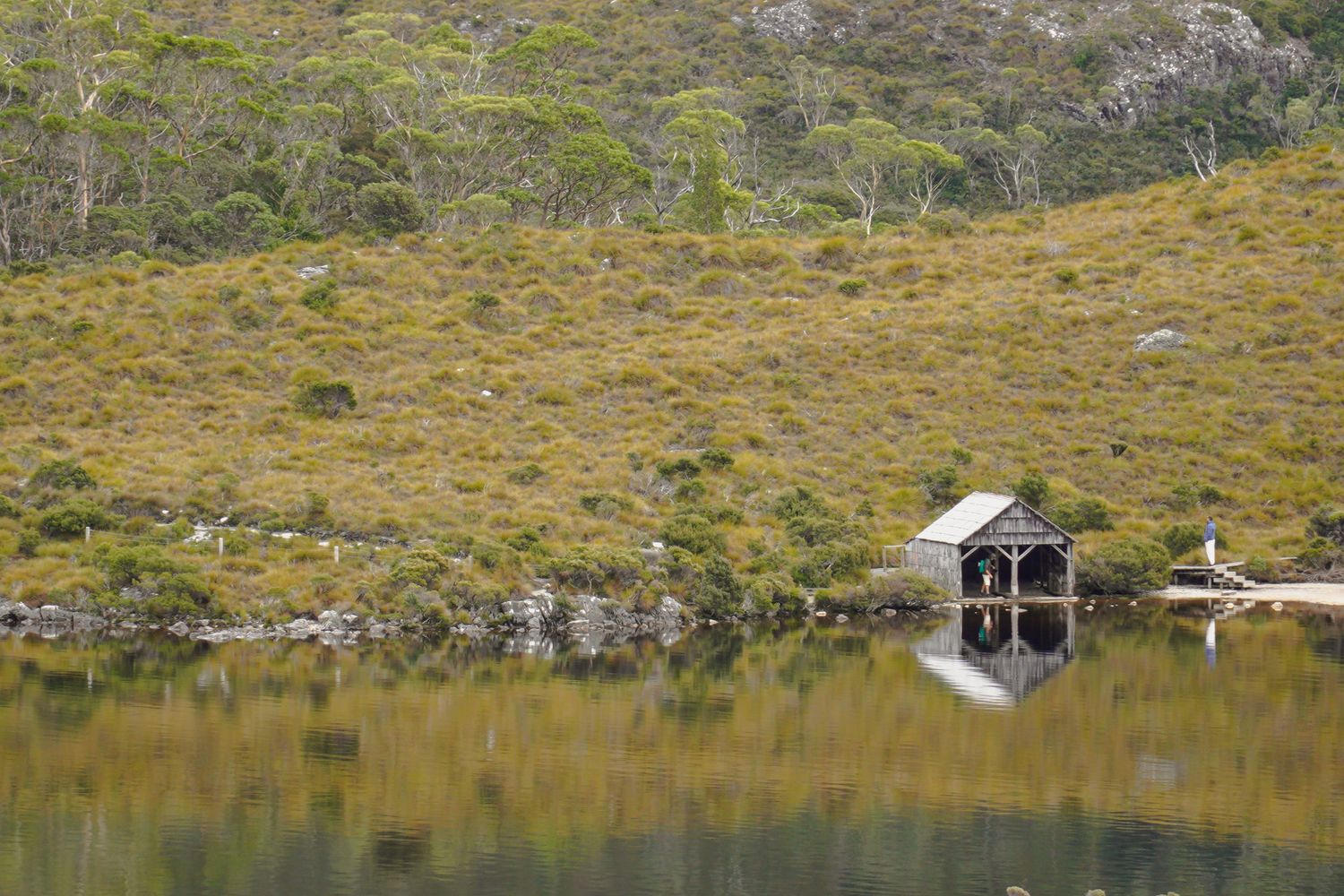
Cradle Mountain and the Dove Lake trail
The park's most popular trail is the Dove Lake Circuit: 6.2km, nearly flat, 2-3 hours, with views of Cradle Mountain the entire way around the alpine lake. It's about 87km from Devonport (~1h30 by car) — the same city where the Spirit of Tasmania ferry arrives.
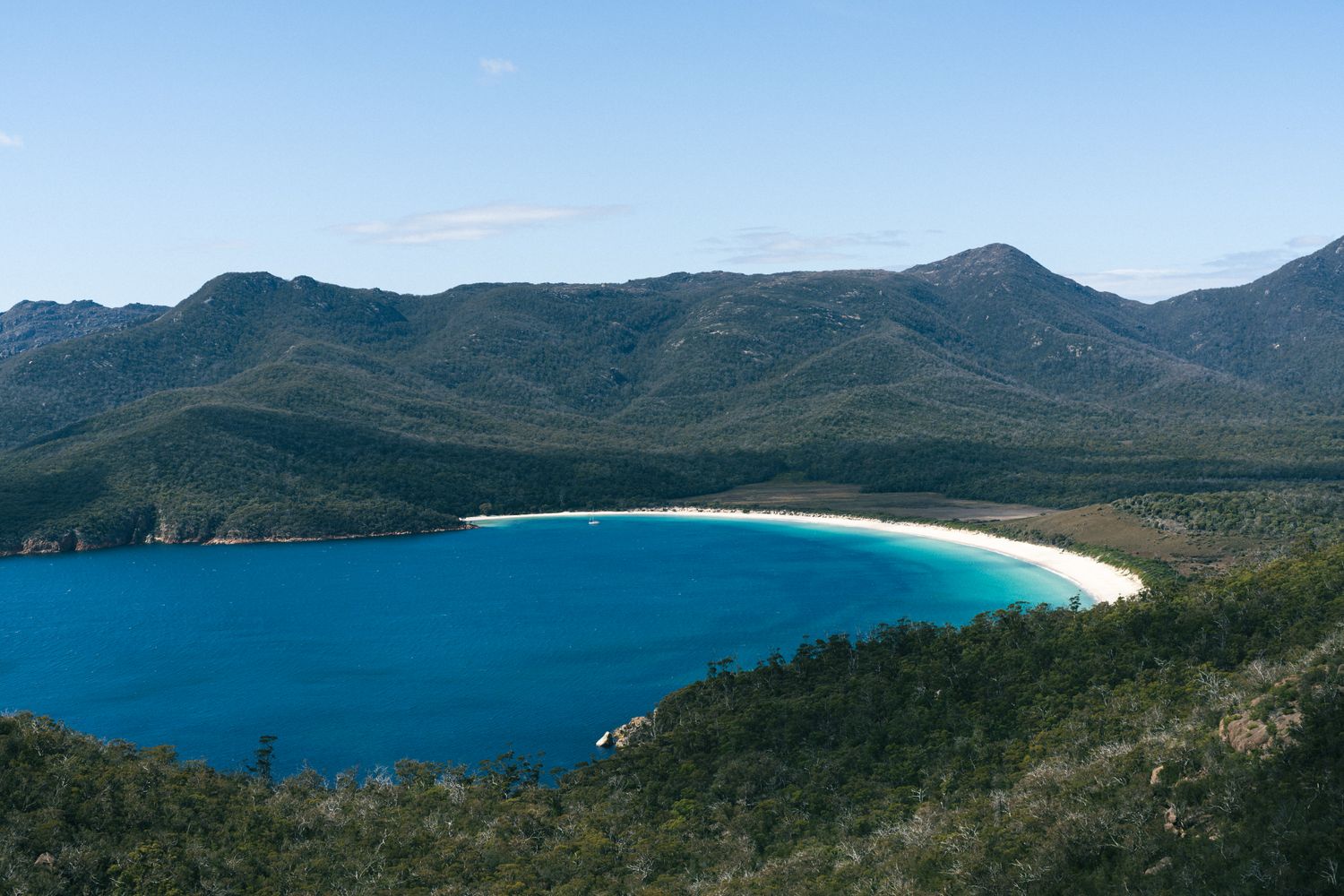
Wineglass Bay
Inside Freycinet National Park, this is one of the most photographed beaches in the country — a "wine glass" shape, turquoise water. It's on the east side of the island, further from Hobart and Cradle Mountain, so it usually fits into a longer road itinerary rather than a quick day trip.
How to get there
- By plane: Qantas, Jetstar and Virgin fly direct from the mainland to Hobart or Launceston.
- By ferry (Spirit of Tasmania): since the end of 2022 the terminal is no longer in Melbourne — departure is from Geelong, about 75km to the southwest, adding 45-60 minutes of driving for those coming from the Melbourne area. Overnight crossing to Devonport. Passenger fare starting from ~AU$109 (one-way only, low-season fare) — you can't book a round trip together, it's two separate bookings. Bringing a car on the ferry costs more — check the exact fare on the official website, it varies a lot by season.
If the plan is to rent a car to drive around the island, compare the cost of bringing your own car on the ferry (Spirit of Tasmania) with renting a car once you're already in Tasmania — the ferry with a vehicle can end up pricier than it looks at first.
How much it costs
| Item | Price |
|---|---|
| MONA (admission + local ferry) | ~AU$69 (AU$39 admission + AU$30 ferry) |
| Spirit of Tasmania (passenger, one-way) | from ~AU$109 |
| Spirit of Tasmania (vehicle, one-way) | Varies a lot — check the official website |
| Hostel | AU$15–40/night |
| 3-4 star hotel | AU$130–220/night |
Base itinerary
4 days: day 1 — Hobart and MONA. Day 2 — travel to Cradle Mountain, Dove Lake trail. Day 3 — travel to the Freycinet region, Wineglass Bay. Day 4 — back to Hobart.
7 days: the itinerary above at a much more relaxed pace, with more trail time and stops in smaller towns along the way.
Comments
Have something to add or a question? Leave a comment below — your experience can help other immigrants in Australia.
Comments are public. You can delete yours from the same browser and device you used to post.
Loading comments…